A 2019 film brought free solo climbing into public view and sparked wide interest. Many people watched a climber scale El Capitan without ropes and began to ask what free solo really means and how safe it is.
To those new to climbing, free solo and free climbing can sound alike. They are not the same. Each style follows different rules, uses different gear, and carries different levels of risk.
Key Takeaways
- Free solo and free climbing are different styles with clear differences in safety and gear.
- Each style has its own history, well-known climbers, and common methods.
- Understanding the risks and equipment helps explain how climbers approach each ascent.
How Free Solo Differs from Free Climbing
Free climbing and free solo climbing are not the same.
In free climbing, the climber uses hands and feet to move up the rock, but a rope and safety gear protect them from a fall.
In free soloing, the climber uses no rope and no protective gear.
| Free Climbing | Free Solo |
|---|---|
| Uses rope and gear | No rope or gear |
| Fall protection in place | No fall protection |
The Story Behind Modern Free Climbing
Free climbing began in the early 1900s in Germany and Great Britain. Climbers relied on their hands and feet to move up rock, using ropes only for safety. This style slowly shaped modern climbing history.
In the 1970s, Yosemite Valley became the center of change. Climbers such as Jim Bridwell, John Bacher, John Long, and Ron Kauk raised standards on big walls like El Capitan and Half Dome.
Later, others pushed the limits even further:
- Lynn Hill free climbed The Nose on El Capitan
- Peter Croft completed bold free routes on major walls
- Climbers tested steep lines like Moonlight Buttress
These climbs redefined what free climbing could achieve on large rock faces.
Free Climbing vs. Aid Climbing
Free climbing and aid climbing both fall under roped climbing, but they use gear in very different ways.
In free climbing, the climber moves up the rock using only hands and feet on natural features. They place ropes, cams, or nuts only to stop a fall. The rope does not help them move upward. Their strength, balance, and skill drive every move.
In aid climbing, the climber uses gear to make progress. They place tools such as cams, nuts, or pitons into cracks and then step or pull on them. Many also use small webbing ladders, called aiders, to stand higher on the wall.
| Type of Climb | How the Climber Moves Up | Role of Gear |
|---|---|---|
| Free Climbing | Uses rock holds only | Stops falls |
| Aid Climbing | Pulls or stands on gear | Supports weight |
Forms of Free Climbing
Free climbing includes several styles. Each one uses the rock for upward movement, not gear. The main types of free climbing are shown below.
### Short-Rock Climbing (Bouldering)
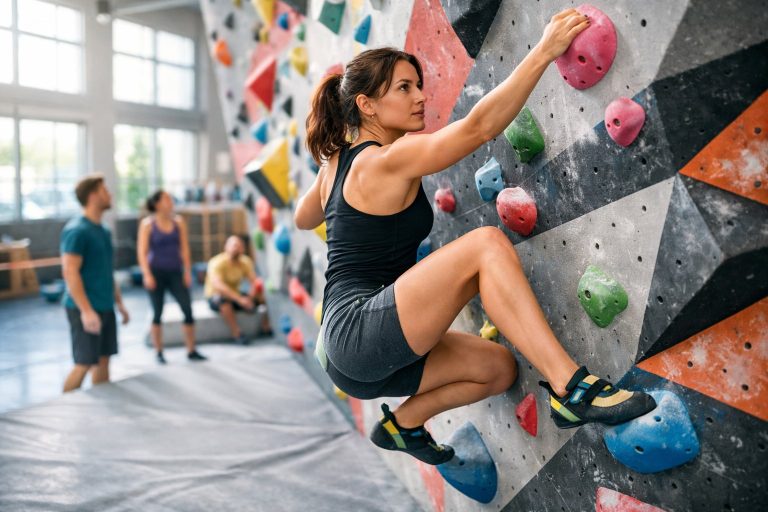
Bouldering focuses on short climbs, often under 6 meters (20 feet). Climbers do not wear a rope or harness.
They rely on strength, balance, and careful footwork. Most climbers place a crash pad on the ground to soften a fall.
Bouldering takes place indoors and outdoors. Some events also test speed, similar to speed climbing, but on lower walls.
### Sport and Traditional Route Climbing
Both sport climbing and traditional climbing use a rope, harness, and safety gear. Climbers attach themselves to protection as they move up the wall.
- Sport climbing uses fixed metal bolts that stay in the rock.
- Traditional climbing requires the climber to place and remove their own gear.
Routes may be a single pitch, up to about 40 meters (130 feet), or many linked pitches that reach much higher.
Each method demands planning and safe rope skills.
### Rope-Free Solo Climbing
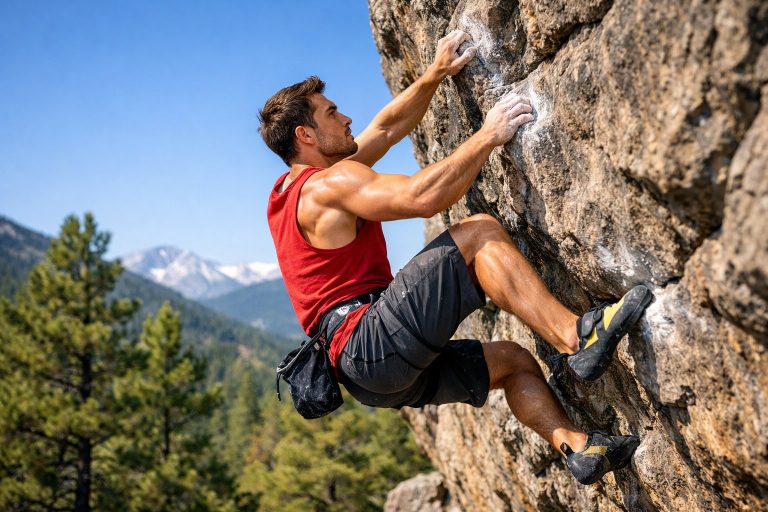
Free solo climbing involves climbing without a rope or protective gear. The climber depends only on natural holds.
A fall can cause serious injury or death.
Some climbers also practice deep water soloing, where they climb above water instead of land.
Types of Free Climbing Ascents
Free climbing uses clear terms to describe how a climber completes a route. Each style depends on falls, prior knowledge, and use of gear.
Clean Lead After Practice (Redpoint)
A redpoint happens when a climber starts at the ground and reaches the top anchors without falling. They cannot hang on the rope or pull on gear to move up.
The climber may have tried the route before. Once they link every move in one clean push, they earn the redpoint. Many climbers also call this a send.
A free solo ascent differs because the climber uses no rope at all.
First-Try Success: Flash and Onsight
Both styles require finishing the climb on the first attempt.
- Flash: The climber gets tips or beta before starting.
- Onsight: The climber begins with no prior information.
In both cases, they must climb without falls or rests on gear.
Practiced on Top Rope (Headpoint)
A headpoint occurs when a climber works the moves on toprope first.
After practice, they lead the route cleanly from bottom to top without falling.
The History of Free Solo
Free solo climbing existed long before Alex Honnold gained fame. Climbers began attempting rope-free ascents when free climbing grew popular in the late twentieth century.
Pioneers of free climbing, including Peter Croft, completed notable solos and helped shape the style and standards that later climbers followed. His name later drew widespread global attention.
Notable Free Solo Climbers
Alex Honnold
Alex Honnold stands as one of the most recognized names in free solo climbing. He climbed without ropes on large rock faces and pushed difficulty to new levels.
He followed a path shaped by earlier climbers like John Bachar and Peter Croft, who often climbed alone in Yosemite. Honnold also shared ties with modern leaders such as Tommy Caldwell, Kevin Jorgeson, and Adam Ondra, though they focused more on roped climbs. His rise brought wide public attention to rope‑free ascents.
Dan Osman and Dean Potter
Dan Osman built a reputation for bold climbs and long controlled falls. He later died during a rope jump when his system failed.
Dean Potter mixed free solo climbing with BASE jumping. He died in a wingsuit accident. Both climbers drew inspiration from earlier figures like John Bachar and stood alongside strong athletes such as Chris Sharma and Lynn Hill, who shaped modern climbing standards.
Hansjörg Auer
Hansjörg Auer gained respect for a rope‑free climb of Attraverso il Pesce in Italy’s Dolomites. The route spans about 850 meters and carries a grade of 5.12c.
His skill linked him to European greats like Wolfgang Güllich and Catherine Destivelle, as well as bold climbers such as Alain Robert.
Brad Gobright
Brad Gobright earned admiration for his calm approach and strong desert climbs. He died in a rappelling accident in Mexico in 2019.
Many in the climbing world valued his quiet focus and steady commitment to high‑risk routes.
Key Contrasts Between Free Climbing and Free Soloing
Free climbing uses safety equipment. A free climber moves using hands and feet on the rock but wears a rope, harness, and protection. If the climber falls, the gear is meant to catch them.
Free soloing, also called solo climbing, uses no rope or backup system. The climber relies only on skill and control. A fall during soloing almost always leads to serious injury or death.
| Free Climbing | Free Soloing |
|---|---|
| Uses rope and gear | No protective equipment |
| Falls are usually stopped | No protection from falls |
| Lower overall risk | Very high personal risk |
Comparing the Dangers of Free Climbing and Free Solo
Free climbing uses ropes and protective gear. Free solo climbing does not. This key difference greatly changes the level of risk.
In free climbing, a fall often ends with the rope catching the climber. Most climbing injuries include sprained ankles, cuts, or bruises. Serious harm can happen, but safety systems lower the chance of fatal consequences. Safety considerations such as harness checks and partner support play a major role.
Free solo climbing depends fully on self-reliance. There is no backup system. A single mistake can lead to broken bones or death.
| Factor | Free Climbing | Free Solo |
|---|---|---|
| Gear | Rope and protection | No rope |
| Injury Risk | Usually minor | Often severe |
| Fear Management | Shared focus with partner | Total mental control and visualization required |
Equipment Differences Between Free Climbing and Free Soloing
Free soloing uses very little climbing equipment. The climber often wears only climbing shoes and carries a chalk bag for grip during moves like crimping or smearing. There is no harness, no climbing rope, and no protective gear. Some may place a crash pad below short routes, but many solo climbs have no backup at all.
Free climbing requires far more protective equipment. The gear depends on the style.
| Style | Common Gear |
|---|---|
| Bouldering | Crash pad, climbing shoes, chalk bag |
| Sport Climbing | Harness, rope, quickdraws, bolts, belayer, belay device |
| Trad Climbing | Rope, harness, cams, nuts, anchor points, helmet |
A belayer manages the rope through a belay device. Climbers may use self-belay systems in some settings. In a climbing gym, fixed bolts and anchors stay in place. On big walls, climbers may also use a portaledge for rest.
1. Does Free Climbing Require No Rope?
Free climbing allows a rope, but the climber does not pull on it to move upward. They rely on hands and feet for progress.
- Free climbing: rope for fall protection only
- Free soloing: no rope or safety backup
2.Who Is Considered the Top Free Solo Climber?
Many climbers and fans view Alex Honnold as the best free solo climber in the world. He gained global attention after appearing in the Academy Award–winning film Free Solo. The film shows his rope-free climb of El Capitan in Yosemite National Park.
El Capitan rises about 1,000 meters and stands as one of the hardest big wall routes on earth. Climbing it without ropes demands:
- Strong physical control
- Careful planning
- Total focus
Honnold may not have the largest build, but he maintains solid strength and steady form, which matter most in free solo climbing.
3. How Do Free Climbers Descend?
After finishing a pitch on routes like Freerider or the Dawn Wall, climbers must return safely to the ground. They often choose one of these methods:
- Hike down a marked trail from the summit.
- Rappel using a rope fixed to anchors at the top.
- Downclimb part of the wall on easier sections of nearby climbing routes.
Frequently Asked Questions
How Do Safety Levels Compare Between Roped Climbing and Climbing Without a Rope?
Free climbing uses ropes and gear to stop a fall. If a climber slips, the rope and partner help reduce injury.
Free solo climbing does not use ropes or safety gear. A fall almost always leads to serious injury or death.
The main difference is simple:
- Free climbing: Fall protection in place
- Free soloing: No fall protection
How Do Training and Mental Focus Differ Between These Two Styles?
Free climbers train for strength, endurance, and technique. They also practice falling and trust their gear.
Free solo climbers must train their minds even more. They need full control over fear and strong focus. Small mistakes can have severe consequences.
Many solo climbers rehearse routes with ropes before climbing alone.
What Gear Does Each Type of Climbing Require?
Free climbing requires safety equipment. Climbers use:
- Rope
- Harness
- Belay device
- Quickdraws or other protection
- Climbing shoes and chalk
Free solo climbers use only:
- Climbing shoes
- Chalk
They do not carry ropes, harnesses, or protective gear.
Can a Roped Climber Move Into Solo Climbing?
Some climbers shift from free climbing to free soloing. This move requires careful thought.
They must have:
- Strong technical skill
- Deep route knowledge
- Mental control under stress
Most experienced climbers choose not to free solo because of the high risk.
What Dangers Come With Solo Climbing Compared to Roped Climbing?
Both styles carry risk. Rock can break, weather can change, and hands can slip.
In free climbing, ropes reduce the danger of a fall. Injuries can still happen, but survival rates are higher.
In free soloing, a fall often leads to death. The lack of protection creates extreme consequences.
What Major Milestones Stand Out in Solo Climbing History?
Several solo climbs gained global attention.
In 2017, Alex Honnold climbed El Capitan in Yosemite without a rope. This climb covered about 3,000 feet of vertical rock.
Other climbers have completed difficult solo ascents on famous routes in Europe and North America. These climbs showed high technical skill and mental control, but they also highlighted the serious risks of the sport.