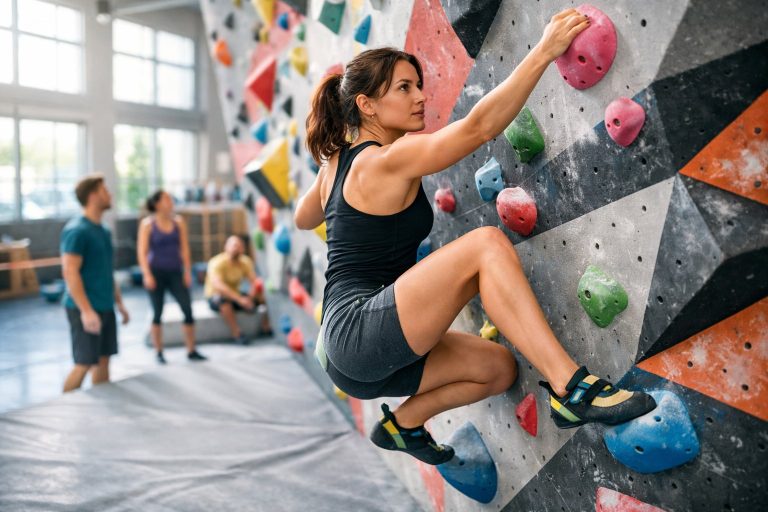
Getting better at climbing requires consistent practice, proper technique, and gradual strength building. Many climbers struggle to progress because they focus on the wrong areas or rush through important fundamentals.
The key to improving at climbing is mastering basic footwork and body positioning before trying to muscle through difficult routes. Most beginners rely too much on their arms and grip strength. They skip over the core techniques that make climbing easier and more efficient.
This guide breaks down the essential skills every climber needs to develop. It covers everything from foot placement to building endurance to creating better practice habits. Climbers who follow these methods will see clear improvements in their ability and confidence on the wall.
Key Takeaways
- Focus on proper footwork and body positioning instead of relying on arm strength alone
- Build climbing-specific strength through consistent practice and targeted training exercises
- Use smart practice methods and maintain a positive mindset to progress steadily through harder routes
Understand the Basics of Climbing
Climbing involves three main styles that suit different skill levels and goals, a grading system that measures difficulty, and specific gear that keeps climbers safe and helps them perform better.
Types of Climbing and Their Benefits
Bouldering involves climbing short walls without ropes, typically 12-15 feet high. Climbers use crash pads below to cushion falls. This style builds strength quickly and lets climbers practice moves repeatedly. Most climbing gyms have dedicated bouldering areas with padded floors.
Top rope climbing uses a rope anchored at the top of the wall. A partner on the ground holds the rope to catch falls. This method is the safest way to start because falls are short and controlled. It works well for learning basic techniques and building endurance on longer routes.
Sport climbing requires climbers to clip their rope into bolts as they move up the wall. This style teaches risk management and requires more experience than top rope. Outdoor climbing often uses this method on natural rock types like granite, limestone, and sandstone.
Indoor climbing provides a controlled environment to learn all three styles. Outdoor climbing adds challenges like weather, uneven rock surfaces, and route finding.
Climbing Grades and What They Mean
Climbing grades measure route difficulty using different systems. The Yosemite Decimal System rates rock climbing routes from 5.0 to 5.15, with higher numbers meaning harder climbs. A 5.5 route suits beginners, while 5.10 and above challenges experienced climbers.
V-scale grades measure bouldering problems from V0 to V17. Most beginners start at V0 or V1. Each number jump represents a significant difficulty increase.
Grades consider hold size, wall angle, required technique, and necessary strength. A 5.8 route at one climbing gym might feel easier or harder than a 5.8 at another location. Grades serve as guidelines, not exact measurements.
Essential Climbing Gear
Climbing shoes are the most important piece of gear. They fit snugly to provide precision on small holds. Beginners should choose comfortable shoes with flat profiles. Specialized shoes for advanced climbing come later.
Harnesses connect climbers to ropes for top rope and sport climbing. They must fit properly around the waist and thighs. Bouldering does not require harnesses.
Chalk dries sweaty hands to improve grip. Climbers carry it in small bags attached to their waist.
A belay device controls the rope when a partner climbs. The belayer uses this tool to catch falls and lower climbers safely. Climbing gyms often require belay certification before allowing rope climbing.
Perfect Your Footwork and Balance
Good footwork saves energy and makes hard climbs feel easier. Climbers who focus on precise foot placement and balance can climb longer routes without getting tired.
Precise Foot Placement Techniques
Climbers should place their feet deliberately on footholds rather than just stepping anywhere. The ball of the foot works best for most footholds because it provides the most control and power. When stepping on a hold, climbers need to look at where their foot will go before moving it.
Small footholds require extra attention. Climbers should use the inside or outside edge of their shoe depending on the angle. The toe should point in the direction they plan to move next.
Once a foot is on a hold, it should stay there. Adjusting or repositioning feet wastes energy and can throw off balance. Climbers should commit to each foot placement and trust it before moving upward.
Building Balance on the Wall
Balance keeps a climber’s center of gravity over their feet. This reduces the strain on arms and hands. Climbers should keep their hips close to the wall and position their body over their feet whenever possible.
Key balance techniques:
- Shift weight smoothly between feet
- Keep three points of contact on the wall
- Use straight arms to conserve energy
- Position hips based on hold locations
Climbers often need to drop one hip or flag a leg to maintain balance on overhanging sections. A flag involves extending one leg out to counterbalance body position without placing it on a hold.
Trusting and Using Your Legs
Legs are much stronger than arms, yet many beginners rely too heavily on upper body strength. Climbers should push with their legs rather than pull with their arms. This climbing technique helps prevent fatigue and allows for longer sessions.
Standing up on footholds engages the leg muscles properly. Climbers should think about pushing their body upward from their feet. Each move should start with the legs doing most of the work while arms mainly provide stability.
Building trust in footholds takes practice. Climbers need to believe their feet will hold before committing their weight. Testing a foothold gently, then fully weighting it, helps build this confidence over time.
Develop Essential Climbing Techniques
Mastering specific body movements transforms a struggling climber into someone who moves efficiently up the wall. These techniques reduce energy waste and open up routes that previously seemed impossible.
Body Positioning for Efficiency
Keeping hips close to the wall is the foundation of efficient climbing. When a climber’s hips drift away from the rock, their arms bear most of their body weight. This position exhausts the arms quickly.
Proper body positioning means keeping three points of contact on the wall while moving the fourth. The climber’s center of gravity should stay over their feet, not hanging from their arms.
Key positioning principles:
- Straight arms – Bent arms tire faster than straight arms
- High feet – Placing feet higher engages leg muscles instead of arm muscles
- Hip rotation – Turning hips toward the wall on steep terrain keeps the body closer to holds
On slab climbing, the body stays perpendicular to the rock face. The climber pushes their hips forward and keeps weight on their toes. This stance maximizes friction and prevents feet from slipping.
Flagging, Drop Knees, and Heel Hooks
Flagging stabilizes the body when only three holds are available. The climber extends one leg out to the side or behind, using it as a counterbalance. This technique prevents the body from swinging away from the wall.
A drop knee involves rotating the hip and dropping the knee toward the ground. The inside edge of the foot presses against the hold while the knee points down. This move allows climbers to reach distant holds and rest on steep walls.
The heel hook places the heel on a hold above waist level. The climber pulls with their hamstring and core muscles. This climbing move is essential for overhangs and roof sections where arm strength alone isn’t enough.
Dynamic Moves and Overhangs
Dynamic moves involve momentum to reach holds that static positioning can’t access. The climber bends their knees, then explodes upward in one controlled motion. Timing and accuracy matter more than raw power.
Overhangs require specific techniques because gravity pulls the climber away from the wall. Keeping feet high and using heel hooks maintains body tension. Core engagement prevents the lower body from sagging.
The crux of many overhanging routes involves a dynamic move between two poor holds. Climbers generate momentum from their legs, not their arms. They commit fully to the movement rather than hesitating halfway through.
Essential overhang techniques:
- Engage core muscles constantly
- Move quickly through difficult sections
- Rest on straight arms between moves
- Use momentum instead of static strength
Build Climbing-Specific Strength and Endurance
Climbers need targeted strength training that focuses on finger strength, upper body power, and muscular endurance. A structured training schedule with proper rest allows the body to adapt and prevents injury.
Finger Strength and Grip Types
Finger strength is the foundation of climbing ability. Climbers use three main grip types on the wall: crimps, pinches, and slopers.
Crimps require bent fingers on small edges and put significant stress on finger tendons. Pinches use the thumb pressing against the fingers to hold volumes or wider features. Slopers demand open-hand strength where the fingers stay relatively straight against rounded holds.
Each grip type uses different muscles and tendons. A climber should train all three types to avoid weaknesses on varied terrain.
New climbers should build baseline grip strength through regular climbing before adding specific finger training. Experienced climbers can target weak grip types by choosing routes that emphasize those holds.
Upper Body and Core Conditioning
Upper body strength helps climbers pull through difficult moves and maintain body tension. The back, shoulders, and arms work together during every climbing movement.
Pull-ups and rows build the pulling muscles needed for overhanging terrain. Push-ups and shoulder exercises create balanced strength that prevents injury. Core exercises like planks and leg raises help climbers keep their feet on the wall during steep sections.
Climbers should include these exercises 2-3 times per week:
- Pull-ups (3 sets of 5-10 reps)
- Rows (3 sets of 8-12 reps)
- Planks (3 sets of 30-60 seconds)
- Shoulder presses (2 sets of 8-10 reps)
Body tension comes from core strength. A strong core allows climbers to transfer power from their legs to their upper body efficiently.
Campus Board and Hangboard Training
The campus board is a training tool with wooden rungs or holds spaced vertically. Climbers use it without feet to build explosive upper body power and contact strength. Campus board exercises involve dynamic movements between rungs.
A hangboard is a board with various holds for finger strength training. It allows climbers to safely load their fingers in a controlled way.
Hangboard sessions typically last 30-45 minutes and include:
- Warm-up climbs or exercises
- 3-6 grip positions
- 10-second hangs with 3-minute rest
- 3-5 repeats per grip type
Campus board training suits advanced climbers only. Beginners risk injury because their tendons have not adapted to high loads. Hangboards work for intermediate climbers who have at least one year of consistent climbing experience.
Both tools require complete rest between efforts. Quality matters more than quantity in finger strength training.
Training Schedule and Rest Days
A balanced training schedule includes climbing days, strength training days, and rest days. Most climbers train 3-4 days per week with at least one full rest day between intense sessions.
Rest days allow tendons and muscles to repair and grow stronger. Fingers and tendons need 48-72 hours to recover from hard efforts. Climbing or training too frequently leads to overuse injuries and decreased performance.
A sample weekly schedule might look like this:
| Day | Activity |
|---|---|
| Monday | Climbing (technique and endurance laps) |
| Tuesday | Rest or light cardio |
| Wednesday | Strength training and hangboard |
| Thursday | Rest |
| Friday | Climbing (harder routes, fewer attempts) |
| Saturday | Long climbing session or outdoor climbing |
| Sunday | Complete rest |
Endurance improves through high-volume climbing sessions with many laps on easier routes. Strength develops during shorter sessions focused on difficult moves with long rest periods.
Climbers should listen to their bodies and take extra rest when tendons feel sore or tired. Consistent moderate training produces better results than sporadic intense efforts.
Master Movement and Climbing Skills
Strong movement skills and solid technique separate average climbers from great ones. Climbers who focus on precise footwork, quiet movement, and smart route reading make faster progress than those who rely only on strength.
Practicing Traversing and Downclimbing
Traversing builds endurance and teaches climbers to move efficiently across the wall. Instead of always climbing straight up, a climber should spend time moving sideways along the wall at the same height. This practice improves balance and forces the body to use different muscle groups.
Downclimbing develops control and reveals weaknesses in technique. Most climbers only practice going up, but learning to down climb safely makes them more aware of foot placement and body position. A climber should downclimb routes they can already complete easily.
Start with simple traverses on easy terrain. Move across the wall for 20-30 feet, focusing on smooth weight shifts and precise foot placement. As skills improve, traverse on steeper walls or use smaller holds.
Climbing Quietly and Effortlessly
Quiet climbing shows good technique and control. When a climber moves without making noise, they waste less energy and maintain better balance. Loud foot scrapes or slapping hands on holds indicate rushed, inefficient movement.
Climbers should place their feet deliberately on holds instead of slapping them down. Each foot placement should be intentional and quiet. The same applies to hands – grabbing holds smoothly uses less energy than aggressive movements.
Key elements of quiet climbing:
- Place feet precisely on the best part of each hold
- Shift weight gradually between holds
- Keep hips close to the wall
- Move with controlled speed, not rushed movements
Practice this skill on easy routes where strength is not a limiting factor. Focus entirely on silent, smooth movement until it becomes natural.
Improving Route Reading and Beta
Route reading means studying a climb before starting it. Good climbers identify rest spots, difficult sections, and the best sequence of moves. This mental preparation saves energy and reduces the chance of getting stuck.
Beta refers to specific information about how to climb a route. A climber should look for obvious holds, but also notice body positions, foot sequences, and where to clip quickdraws on sport routes. Taking two minutes to read a route can save ten minutes of struggling.
Stand back from the wall to see the full route. Identify large features like corners, overhangs, or distinct hold colors. Then look closer at individual moves and transitions between sections.
Experimenting With New Techniques
Trying different climbing techniques helps climbers improve faster and solve problems on the wall. A climber who only uses familiar methods will plateau quickly. Testing new approaches reveals better ways to move efficiently.
Common techniques to practice include:
- Flagging: Extending one leg out for balance instead of placing it on a hold
- Heel hooks: Pulling with the heel on a hold to reduce arm strain
- Knee bars: Jamming the knee and foot against rock for a no-hands rest
- Drop knees: Turning the hip into the wall while dropping one knee down
Each technique works best in specific situations. A climber should climb a lot on varied terrain to learn when each method helps most. Trying these moves on easier routes first builds confidence before applying them to harder climbing goals.
Progress Through Effective Practice
Smart practice separates climbers who improve quickly from those who plateau. Setting specific targets, following a training plan, and preparing the body properly before climbing sessions leads to measurable gains in strength and skill.
Creating Climbing Goals
Climbers need specific, measurable goals rather than vague wishes to improve. A beginner climber might aim to complete three 5.9 routes cleanly within two months, while an intermediate climber could target sending their first 5.11a by spring. Writing down these goals and tracking attempts makes progress visible.
Goals should include both performance targets and skill development. A climber might focus on improving footwork precision, building finger strength, or reducing rest time between routes. Breaking larger goals into weekly or monthly milestones keeps motivation high.
Sharing goals with a climbing partner creates accountability. Partners can observe technique, provide encouragement, and celebrate achievements together. The climbing community often supports goal-setting through group challenges or friendly competitions at the gym.
Incorporating Structured Training
Structured training follows a planned schedule rather than random climbing sessions. Climbers should dedicate specific days to different aspects like endurance, power, or technique work. A simple weekly structure might include two technique days, one strength day, and one endurance day.
Beginner climbers benefit from focusing on volume and movement variety. They should climb many different routes at comfortable grades to build a foundation. Intermediate climbers need targeted weakness training, such as campus board work for power or 4x4s for endurance.
Rest days are part of structured training. Muscles grow stronger during recovery, not during climbing. Most climbers need at least two full rest days per week to prevent injury and allow adaptation.
Using Warm-Ups Effectively
A proper warm-up prepares tendons, muscles, and joints for climbing stress. Climbers should start with 5-10 minutes of light cardio like jumping jacks or jogging to increase blood flow. Dynamic stretches for shoulders, hips, and ankles come next.
The climbing warm-up begins on easy terrain well below the climber’s limit. Starting on routes two or three grades below their project level allows movement patterns to activate without strain. Gradually increasing difficulty over 20-30 minutes reduces injury risk significantly.
Finger-specific warming matters most for climbing. Gentle hangs on large holds and progressive loading of smaller holds prepares tendons for intensive gripping. Skipping this step leads to pulley strains and other finger injuries that can sideline climbers for months.
Optimize Your Climbing Environment and Mindset
The right setting and mental approach can make a big difference in climbing progress. Finding supportive spaces, respecting physical limits, and staying mentally engaged helps climbers improve steadily over time.
Benefits of Climbing Gyms and Community
Climbing gyms offer controlled settings where climbers can practice safely year-round. These facilities provide routes at different difficulty levels, allowing climbers to progress at their own pace. Most climbing gyms also maintain equipment and update routes regularly to keep training fresh.
The climbing community at these gyms creates valuable learning opportunities. A climbing partner can spot problems in technique that might otherwise go unnoticed. They also provide safety support during belaying and can share tips from their own experience.
Key advantages of gym communities include:
- Access to experienced climbers who demonstrate proper technique
- Opportunities to learn from watching others tackle difficult routes
- Built-in motivation through friendly competition and shared goals
- Safety through partner checks and group awareness
A beginner climber often learns faster in gym environments than climbing alone outdoors. The social aspect reduces intimidation and makes asking questions easier.
Listening to Your Body and Injury Prevention
Climbers need to recognize when their body signals fatigue or pain. Fingers, shoulders, and elbows face significant stress during climbing. Pushing through sharp pain or persistent discomfort leads to injuries that can sideline climbers for months.
Rest days are as important as training days. Tendons and ligaments need more recovery time than muscles. Most climbers should take at least one or two full rest days per week.
Warning signs to watch for:
- Sharp pain in fingers or joints
- Swelling that lasts more than a day
- Decreased grip strength
- Pain that worsens during climbing
Listen to your body by stopping immediately when something feels wrong. Minor discomfort often becomes major injury when ignored. Warming up before climbing and stretching afterward reduces injury risk significantly.
Maintaining Motivation and Overcoming Plateaus
Progress in climbing naturally slows after initial gains. Plateaus happen when the body adapts to current training methods. Changing workout routines breaks through these stalls.
Setting specific, measurable goals keeps motivation high during flat periods. A climber might aim to complete a particular route grade or hold a hanging position for a set time. These concrete targets provide direction when general improvement seems to stall.
Trying different climbing styles refreshes mental engagement. Someone who usually boulders can try top-rope climbing. Outdoor climbing offers new challenges compared to gym routes. Even switching to a different climbing gym introduces fresh routes and problems.
Tracking progress in a journal shows improvement that might not feel obvious day-to-day. Recording completed routes, training sessions, and personal bests reveals patterns and growth over weeks and months.