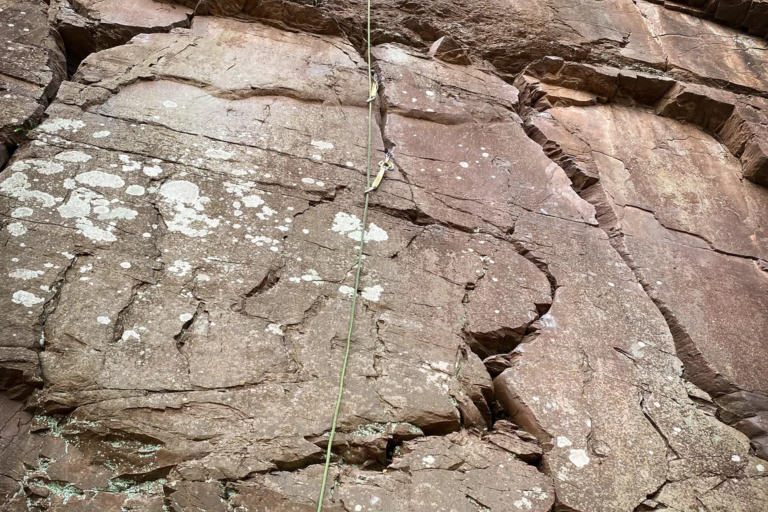
Climbers often wonder how a 9b route compares to a bouldering problem on the V scale. Both measure difficulty, but they come from different worlds—sport climbing and bouldering. A 9b route roughly matches the difficulty of a V15 boulder problem, showing how elite sport climbs demand both endurance and power.
Understanding this conversion helps climbers set realistic goals and appreciate the skills each discipline requires. Sport routes test sustained strength and technique over many moves, while boulders focus on short, intense bursts of power. Knowing how these grades align gives context to achievements across styles.
This connection between the 9b and V scales highlights how grading systems, though different, share a common goal: describing the physical and technical challenge of climbing at the highest level.
Key Takeaways
- 9b routes and V-scale boulders measure different climbing styles.
- A 9b sport climb is roughly equal in difficulty to a V15 boulder.
- Understanding grade conversions helps compare strength and endurance demands.
Understanding the 9b to V Scale Conversion
Climbers use several grading systems to describe route difficulty, and understanding how a 9b route compares to a V-scale boulder problem helps them plan training and evaluate performance. The comparison highlights the physical and technical demands of sport routes versus short bouldering sequences.
Overview of Climbing Grading Systems
Climbing grades vary by region and discipline. The French system, used for sport climbing, runs from 1 to 9c and measures continuous difficulty over a full route. A 9b represents an extremely hard climb, achieved by only elite athletes.
The Yosemite Decimal System (YDS), common in North America, expresses difficulty for roped climbs, ranging from 5.0 to 5.15. A 5.15b roughly equals a French 9b.
Other systems, such as the British adjectival, UIAA, and Ewbank, serve similar purposes in different countries. Each reflects local climbing styles and rock quality. Conversion charts from sites like Mountain Project help climbers compare grades, though differences in route length, style, and protection mean conversions are approximate, not exact.
Bouldering Grades: V-Scale and Fontainebleau
Bouldering uses different grading systems because problems are short and powerful. The V-scale (or Vermin scale) originated in the United States and ranges from VB for beginners to V17 for the hardest problems known.
In Europe, the Fontainebleau system is common. It starts around 1A and currently extends to 9A. The Fontainebleau scale focuses on technical precision and body control rather than endurance.
Approximate comparison:
| V-Scale | Fontainebleau |
|---|---|
| V0 | 4–4+ |
| V5 | 6C |
| V10 | 7C+ |
| V15 | 8C |
| V17 | 9A |
Both systems are open-ended, meaning new, harder problems can extend the scale. Climbers use these grades to gauge strength and progress across different styles of rock climbing.
How 9b Routes Correspond to V Scale Grades
A 9b sport route often includes crux sequences similar in intensity to V14–V15 boulder problems. These short sections require explosive power and precise movement. However, a route’s sustained difficulty and length make direct conversion imperfect.
Climbers describe 9b routes as containing multiple V-scale–level boulder problems linked by endurance climbing. For example, a 9b route may feature two V13 cruxes separated by moderate sections.
When comparing grades, it helps to think of the V-scale as measuring peak difficulty, while the French system measures sustained effort. This distinction explains why a single 9b route might equate to several high-end boulder problems rather than one isolated grade.
Comparing Climbing Disciplines and Grade Systems
Climbing grades vary by discipline, region, and history. Each system reflects how climbers measure difficulty—whether through endurance, technical movement, or risk—and helps compare challenges like a 5.15a sport route or a V15 boulder problem.
Differences Between Sport, Trad, and Bouldering Grades
Sport climbing grades, such as the French or Yosemite Decimal System (YDS), measure sustained difficulty across a route. A 5.10a may test endurance, while a 5.14a demands precise technique and power. The French system (e.g., 7a, 8b+) aligns closely with YDS grades from 5.10 upward.
Trad climbing, or traditional climbing, includes both physical and mental demands. The British trad grade uses two parts: an adjectival grade (E1–E12) for overall seriousness and a technical grade (4a–7a) for the hardest move. Poor protection or long runouts can raise the adjectival grade even if the moves are moderate.
Bouldering uses short sequences rated by the V-scale (V0–V17) or the Fontainebleau scale (5A–9A). These focus on the hardest move, not endurance. A V10 boulder may equal the crux difficulty of a 5.14a route, but the effort is condensed into a few explosive moves.
| Discipline | Common Scale | Example Grades | Key Focus |
|---|---|---|---|
| Sport | YDS / French | 5.10a–5.15a / 6a–9c | Sustained difficulty |
| Trad | British Trad | E1 5b–E10 7a | Risk, protection, endurance |
| Bouldering | V / Fontainebleau | V0–V17 / 5A–9A | Power, single crux |
Notable Climbs and Grading Benchmarks
Routes and boulders often define grading standards. Adam Ondra’s “Silence” (9c/5.15d) set the upper limit for sport climbing difficulty. Earlier benchmarks like 5.13b and 5.14a marked key progress in the 1980s and 1990s.
In bouldering, problems such as “Burden of Dreams” (V17/9A) represent the top end of the V-scale. These climbs rely on short, precise sequences with minimal margin for error.
Trad routes like E9 6c in the UK highlight how risk and protection affect grades. A technically easier climb can earn a higher adjectival grade if it involves serious fall potential or minimal gear placements.
Other climbing forms—aid, ice, and mixed climbing—use separate systems. For example, A3 or M10 grades describe difficulty in aid or dry tooling, where climbers use gear or tools to progress rather than pure free movement.
Challenges of Grade Conversion Across Regions
Grade conversion is rarely exact. A 5.12a in the United States may feel similar to a 7a+ in France, but local grading culture and rock style can make one feel harder. Limestone crags often favor technical footwork, while granite may require crack skills not reflected in numeric grades.
In bouldering, a V8 might correspond roughly to 7B+ in Fontainebleau, but conditions, hold types, and beta can shift perception. Indoor routes also tend to grade softer than outdoor climbs because of predictable holds and controlled settings.
Trad grades are even harder to align internationally. The British E-grade includes mental and protection factors not captured by the YDS. A 5.11d crack in Yosemite may equate to an E5 6a in the UK, but the risk profile differs.
Climbers comparing grades across systems should treat conversions as guides, not absolutes. Experience, style preference, and environment often define how a grade truly feels.